Serving Barnwell County and its neighbors since 1852
Trivia, History & Games
Test your news knowledge
The Conversation: U.S. weekly news quiz
From the editors at The Conversation, an independent news organization based in Boston that publishes articles written by academic experts and edited by a team of journalists.
The Crossword Puzzle

Loading crossword puzzle. One moment please.
Very interesting

The ancestors of ostriches and emus were long-distance fliers – here’s how we worked this out

Oleksii Synelnykov/Shutterstock

A 56 million-year-old fossil bone helps explain how this (mostly) flightless family of birds spread to so many different continents.

50 years ago, NASA sent 2 spacecraft to search for life on Mars – the Viking missions’ findings are still discussed today

NASA

The Viking missions paved the way for future Mars missions and helped researchers understand the red planet’s climate and geology.

How is paint made?

Protective paint sprayed onto a steel plate in a factory will have a different recipe than paint used in an art class.

Different paint recipes work for different uses. Two art conservators explain how analyzing paints from the past can reveal how they were made – and how best to preserve them.

Visitors get the sensation of floating above Manhattan at the Summit at One Vanderbilt. These rooms are built with low-iron glass, made with ultrapure silica sand.
Where does your glass come from?
Glass seems simple − it’s just sand and a few more ingredients. Yet mining and production are rarely local, raising questions about sustainability.
Artist's impression of a supernova.
Supernova theory links an exploding star to global cooling and human evolution
Global cooling associated with the impact of supernova remnants may have affected plants and animals, including species related to humans.
Stars form in the universe from massive clouds of gas.
The first stars may not have been as uniformly massive as astronomers thought
Two new studies challenge scientists’ previous theories on how the very first stars in the universe formed.
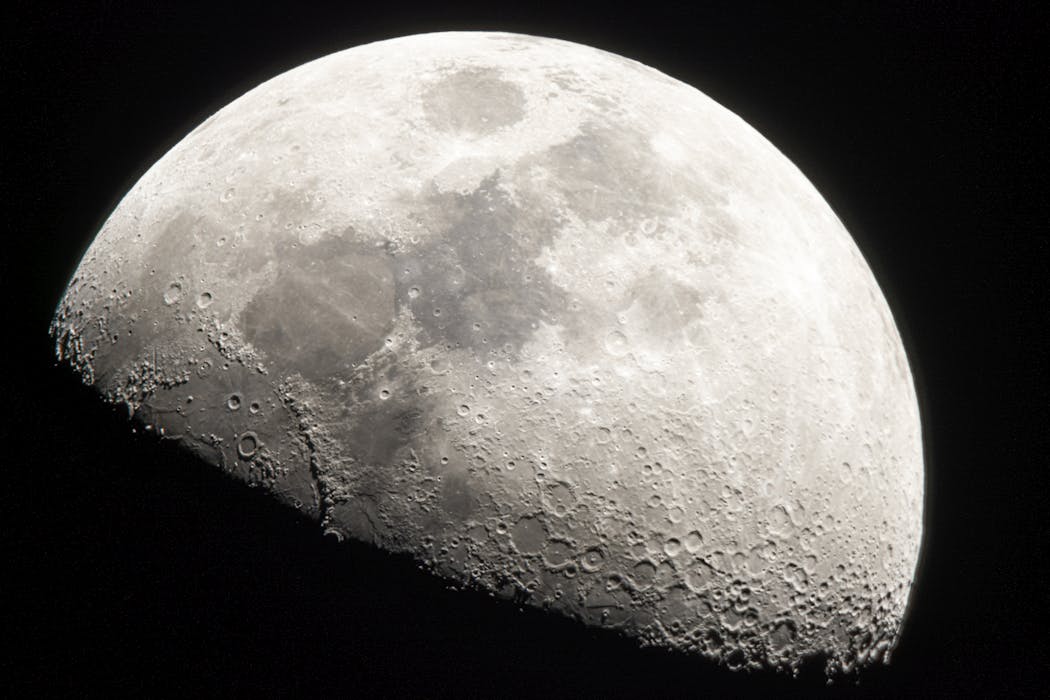
Several missions have already attempted to land on the lunar surface in 2025, with more to come.
NASA wants to put a nuclear reactor on the Moon by 2030 – choosing where is tricky
If you try to launch or land a spacecraft anywhere close to another object on the lunar surface, that object will get sandblasted with rocks, dust and sand.
Top 5 summer sports that surprisingly dominate betting
OLBG reports that summer sports betting thrives with increased wagers on horse racing, baseball, cricket, tennis, and golf, surprising many.
Education, income and demographics shape our views of the unseen world, a survey found.

Sociologists who measured supernatural beliefs in the US found that higher education and higher income are associated with lower levels.
Read more
Wandering magnetic fields would have had noticeable effects for humans. Maximilian Schanner (GFZ Helmholtz Centre for Geosciences, Potsdam, Germany)
Weird space weather seems to have influenced human behavior on Earth 41,000 years ago – our unusual scientific collaboration explores how
Two geophysicists and an archaeologist teamed up to connect space weather 41,000 years ago to human behaviors that might have been in response – and show the value in cross-discipline teamwork.
Why are we so obsessed with bringing back the woolly mammoth?
Rebecca Woods, University of Toronto In just the last several months, de-extinction — bringing back extinct species by recreating them or organisms that resemble them — has moved closer from science fiction to science fact. Colossal Biosciences — an American for-profit de-extinction startup headed by geneticists George Church and Beth Shapiro — announced two major […]
This age old question has been dubbed Olbers' paradox.
Why is space so dark even though the universe is filled with stars?
An astronomer explains why space looks so dark despite containing 200 billion trillion stars.
For some mental processes, humans and animals likely follow similar lines of thinking.
Humans and animals can both think logically − but testing what kind of logic they’re using is tricky
How researchers measure the logical reasoning of monkeys, pigeons, rats, fish and wasps shapes how they understand mental processes in animals − and in people.
'I'll have a coke – no, not Coca-Cola, Sprite.' Justin Sullivan/Getty Images via The Conversation
Pop, soda or coke? The fizzy history behind America’s favorite linguistic debate
An expert in American dialects explains how a ‘health drink’ from the early 1800s spawned so many names and variations.